
Establish Trust, Authority, Referrals, & Outcomes Today!
Schedule a fit call
Hire a ghostwriter for mental health content writer services:
- Clinical directors at treatment centers
- CMOs of mental health apps and digital platforms
- Corporate wellness leaders
- Executive directors at nonprofit mental health orgs
- Private practice therapists and counselors
- Anyone who needs a reliable newsletter that educates, builds trust, and drives action without crossing clinical or ethical lines.
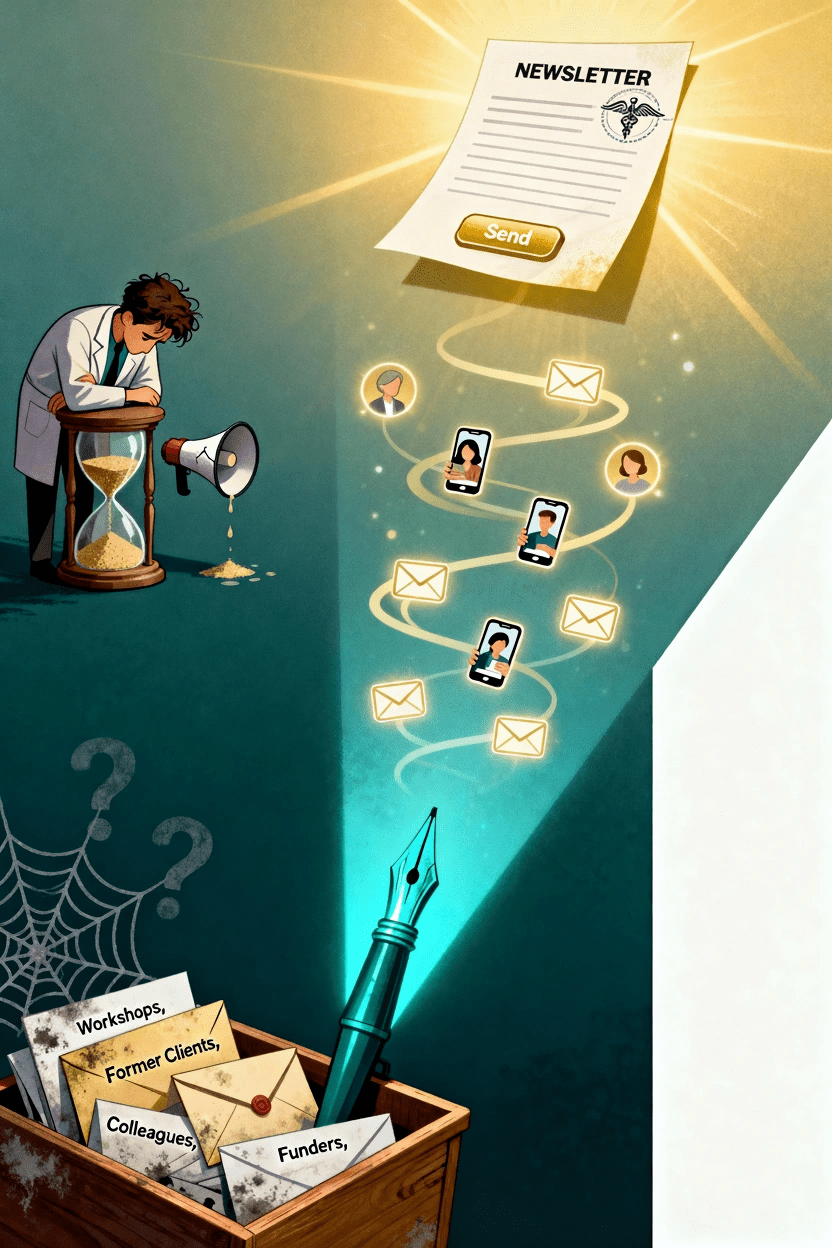
The silence that costs
Your email list sits there. Names you collected at workshops. Former clients who might refer. Colleagues who’d send the right people if they just understood your approach. Potential funders watching to see if you’re consistent.
Silence erodes trust. Sporadic sends signal unreliability.
Hire a ghostwriter for a consistent, voice-true newsletter that can book consultations, lift utilization, win grants, and retain users. Education first. Boundaries intact. Action built in.
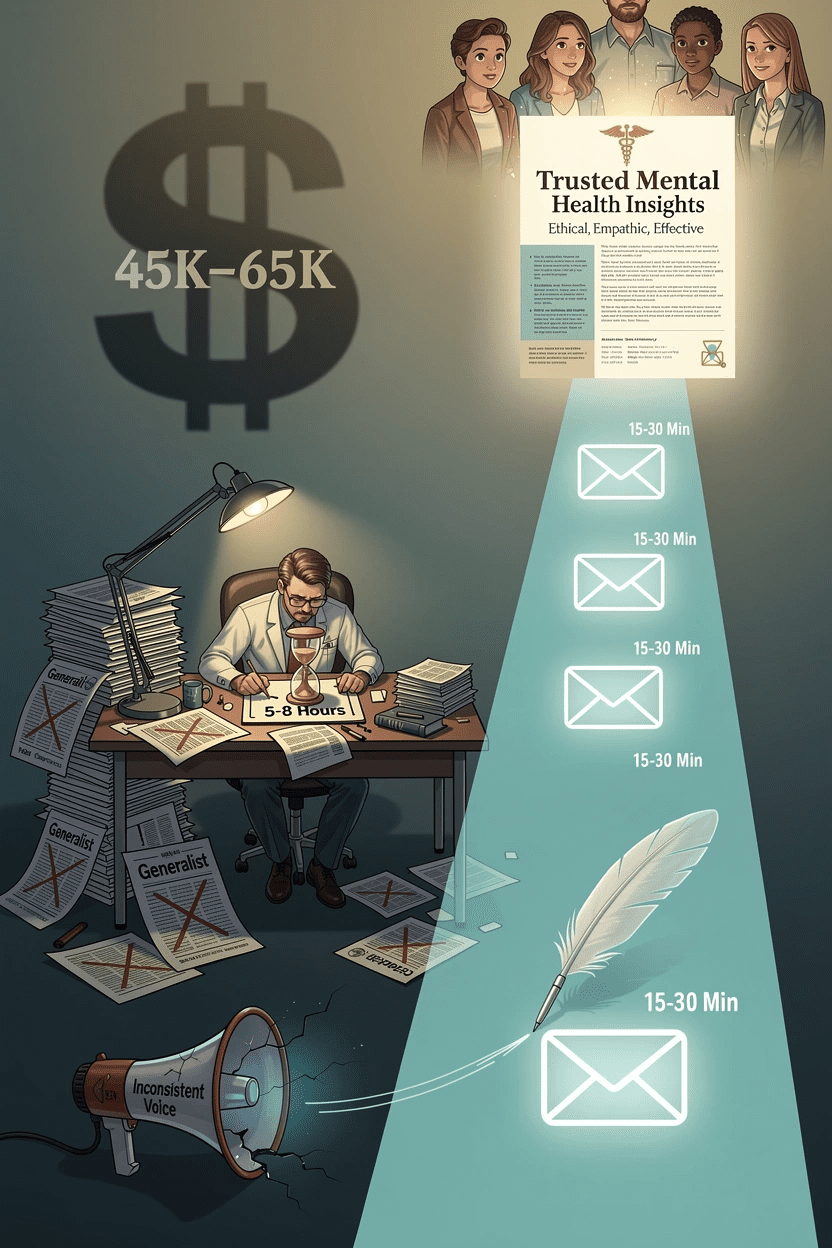
But writing a valuable newsletter takes 5–8 hours per edition. Hours you don’t have.
What inconsistency actually costs
Writing a great newsletter yourself takes 5–8 hours per send—time you could spend treating clients, building programs, or securing funding.
Hiring someone in‑house who understands mental health and email marketing runs $45,000–$65,000 per year—plus benefits, training, and management overhead.
Generalist agencies miss clinical nuance. They produce emails that sound generic, cross boundaries you can’t afford to cross, or require so much review you might as well have written them yourself.
The real cost is silence or inconsistency. An abandoned newsletter tells your audience you’re not reliable. Your relationships atrophy. Your influence fades. People forget you exist.
Or you can get mental health content writer services…
Spend just 15–30 minutes reviewing. Top newsletter ghostwriters can handle everything end-to-end. This is the efficient path.
Hire a Ghostwriter ➡️
We Can Do It All. Get in Touch to See If This Is a Fit.
Voice and audience architecture
1–2 asynchronous interviews to capture your voice, clinical boundaries, and audience segments. We define what each group on your list needs from you: potential clients, former clients, referral partners, funders, employees, community members. Every newsletter speaks to these needs.
Strategy and six‑month plan
Cadence, content formats, and calls to action aligned to your goals—whether that’s booking consultations, increasing program utilization, securing donations, building referral networks, or establishing thought leadership. Your newsletter becomes a strategic tool, not just another email.
Multi‑stakeholder design
Most mental health professionals have multiple audiences in their database. I design newsletters that either segment content for different groups (using your platform’s features) or create universal content with sections that speak to different reader needs. Everyone gets value.
Educational core
Every newsletter includes substance: one micro‑lesson about a mental health concept, one myth‑buster that corrects common misconceptions, one practical tool readers can use immediately, one anonymized clinical insight, or one answer to a frequently asked question. Readers finish each email feeling they learned something valuable.
Relationship nurturing
Hire a ghostwriter to go beyond education. Newsletters maintain connection. For potential clients: lowering barriers to seeking help. For former clients: ongoing support and permission to return. For referral partners: clarity about your approach. For funders: impact updates. For employees: resources and support. Every newsletter deepens these relationships.
Strategic calls to action
Every newsletter includes a clear, appropriate invitation: “Book a consultation,” “Refer a colleague,” “Access this resource,” “Attend our workshop,” “Donate to support our work,” “Utilize this benefit.” CTAs feel like invitations, not demands. And they’re tracked so we know what drives action.
Template design
Branded, scannable, mobile‑first newsletter structure that makes your emails instantly recognizable. Short paragraphs, clear sections, easy to skim. The template evolves as we learn what your audience engages with most.
Subject line testing
Subject lines determine whether your newsletter gets opened or ignored. I craft 2–3 options per draft for you to run A/B tests where your platform allows. Over time, data tells us what resonates: curiosity hooks, benefit clarity, questions, or seasonal angles.
Welcome sequence
3–5 emails that automatically send to new subscribers. Introduces who you are, what they can expect, what makes your approach different, what resources are available, and how to take the next step. Turns new subscribers into engaged readers from day one.
Seasonal and timely topics
Mental health needs shift with seasons and events. Top newsletter ghostwriters create content that anticipates these patterns: holiday stress, New Year’s change fatigue, back‑to‑school anxiety, Mental Health Awareness Month, Suicide Prevention Month, end‑of‑year burnout, daylight savings shifts. Timely content positions you as the expert who understands what your audience is experiencing.
Resource curation
Beyond your original insights, I curate valuable resources: research summaries, reputable articles, upcoming events, new tools (when appropriate), policy changes, community resources. Your newsletter becomes a trusted filter in an overwhelming information landscape.
Stories that build trust
Data has its place, but with appropriate consent and anonymization, I weave in narratives that illustrate your points—client transformations, professional insights, challenges navigated, community impact. You provide the raw material from inside your organization; I handle the narrative craft and privacy protocols.
Insights from analytics
Each month, provide me with the open rates, click‑through rates, which sections generated engagement, unsubscribe patterns, growth trends, and action completions (bookings, donations, resource downloads), which should be auto-generated reports your platform can support. I explain anything you don’t quite get and provide 3–5 specific recommendations based on what’s working.
List growth and re‑engagement
Strategy for growing your email list with qualified subscribers: website opt‑in optimization, lead magnet creation, social media promotion, workshop signup integration, referral partner list‑sharing. Plus periodic re‑engagement campaigns for dormant subscribers. Quality over quantity—engaged readers, not empty numbers.
Content repurposing system
If you’re creating content elsewhere (blogs, social media, speaking, workshops), I repurpose those insights for your newsletter. One blog post becomes a newsletter feature. One workshop becomes a multi‑part series. Your expertise works harder without creating from scratch every time.
Compliance and ethical review
You’ll review every newsletter draft for professional compliance before you set up the send: no diagnosis through email, no therapeutic advice (only general education), appropriate disclaimers and crisis resources, privacy protection in examples, language aligned with your licensing or organizational guidelines.
Collaborative review process
Each newsletter draft sent to you 3–5 days before the scheduled send. Most clients spend 15–30 minutes reviewing—making small tweaks, approving as‑is, or requesting adjustments. Far less time than the 5–8 hours it would take to write it yourself.
Hire a ghostwriter for newsletter services
The six-month build…
Month 1
Voice architecture. Audience mapping. Platform setup. Template design. Welcome sequence creation. First newsletter sent. Establishing tone and structure.
Month 2
Full cadence active. Testing different content formats, topics, and CTAs to see what resonates.
Month 3
First analytics review and optimization. We identify what drives engagement and action, then refine.
Months 4-5
Newsletter library compounds. Open rates stabilize or improve. Subscribers start taking action—booking, referring, donating, utilizing. Your voice becomes the trusted guide in their inbox.
Month 6
Comprehensive performance review and roadmap for continued newsletter growth. You now have a proven system—whether you continue with me or bring it in‑house.
If You Hire a Ghostwriter for Newsletters
By month six, you’ll have…
- A clear newsletter strategy and audience architecture.
- 12 newsletters sent.
- A working welcome sequence that you can set to onboard new subscribers automatically.
- Proven content formats and topics that drive engagement and action.
- Insights from analytics showing what moves your specific goals forward.
- A sustainable newsletter system that keeps running long after we finish building it.
Pricing
Top Newsletter Ghostwriting
Bi‑Weekly Connection
Trust-earning, authority-validating, nurturing, relationship-building mental health content services done-for-you. Professional compliance review. Your time commitment is only 15–30 minutes to review per newsletter.
How we protect integrity and boundaries
Trauma‑informed. Consent‑first. No outcome guarantees. Education, not treatment. Crisis resources where appropriate. Every newsletter is reviewed against your clinical, legal, and organizational guidelines, and you set up which ones go live.
Next Step
Schedule a 20-minute Fit Call
We’ll talk about your audience, your goals, and whether this system makes sense for where you are right now.